


The eThekwini Municipality is under increasing pressure to discover sustainable alternatives to potable water usage due to KwaZulu-Natal's water constraint.
Large amounts of water were being taken from the municipal supply by nearby enterprises while industrial effluent was being dumped into the ocean, posing a problem for resource management and the environment that required a creative, long-term solution.
The
Challenge
Veolia created the Durban Water Recycling (DWR) plant in collaboration with eThekwini Municipality and regional industrial clients.
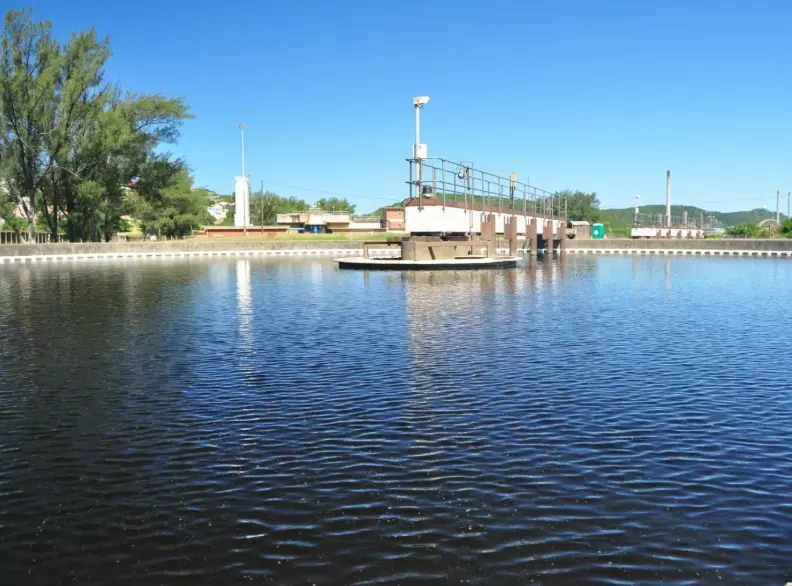
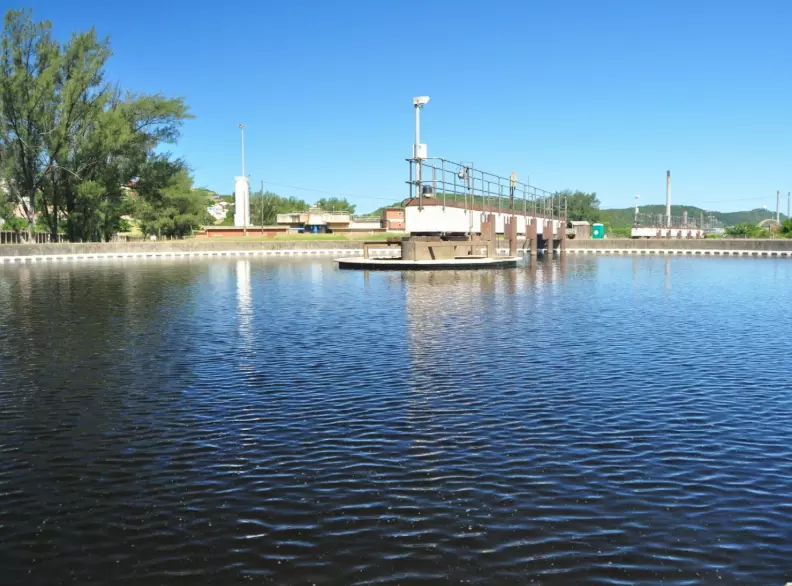
It was put into service in May 2001 and is situated at the Southern Wastewater Treatment Works in Durban, KwaZulu-Natal.
In this historic public-private cooperation, Veolia assumed full responsibility for the facility's design, construction, and continuous operation, providing a top-notch water reuse solution in the center of one of South Africa's most industrialised areas.

Veolia's Solution

What
The Plant Delivers
Large-Scale Wastewater Treatment
The DWR facility has a treatment capacity of 47.5 million litres of wastewater per day and is currently treating around 15 million litres, serving both residential and commercial needs.
Near Potable Water Quality
By achieving stringent quality standards across 22 continually monitored parameters, treated water is generated to a nearly drinkable standard, guaranteeing a secure and dependable supply for industrial reuse.
Industrial Water Supply
Recycled water is supplied directly to industrial users, including Mondi Paper, replacing potable water consumption with a sustainable, cost-effective alternative.
Public-Private Partnership Model
Veolia oversees the facility's entire operating lifecycle under a long-term public-private partnership, guaranteeing sustainability, compliance, and constant performance.
- Reduced Potable Water Consumption: The DWR facility greatly lowers demand on KwaZulu-Natal's potable water resources by providing recycled water to industrial users, hence promoting the region's long-term water security.
- Decreased Environmental Discharge: The plant dramatically reduces the volume of wastewater discharged into the ocean, protecting the coastal environment and marine ecosystems of the KwaZulu-Natal coastline.
- Cost Savings for Industry: Industrial users gain from a dependable, affordable substitute for potable water, which lowers operating expenses while upholding their own sustainability obligations.
- Improved Local Water Sustainability: The DWR plant strengthens the long-term sustainability of local water resources, supporting eThekwini Municipality's environmental goals and the broader water security needs of the region.
The
Impact
A Model for Sustainable Water Reuse
in South Africa
As an example of how public-private partnerships, creative ecological solutions, and sustained operational commitment can turn water scarcity challenges into long-lasting environmental and economic benefits, the Durban Water Recycling plant is a model for sustainable industrial water reuse in South Africa.
Municipalities
We support
# Dolphin Coast Landfill Management
# Overstrand Municipality | Water & Wastewater Management
# Durban Water Recycling