


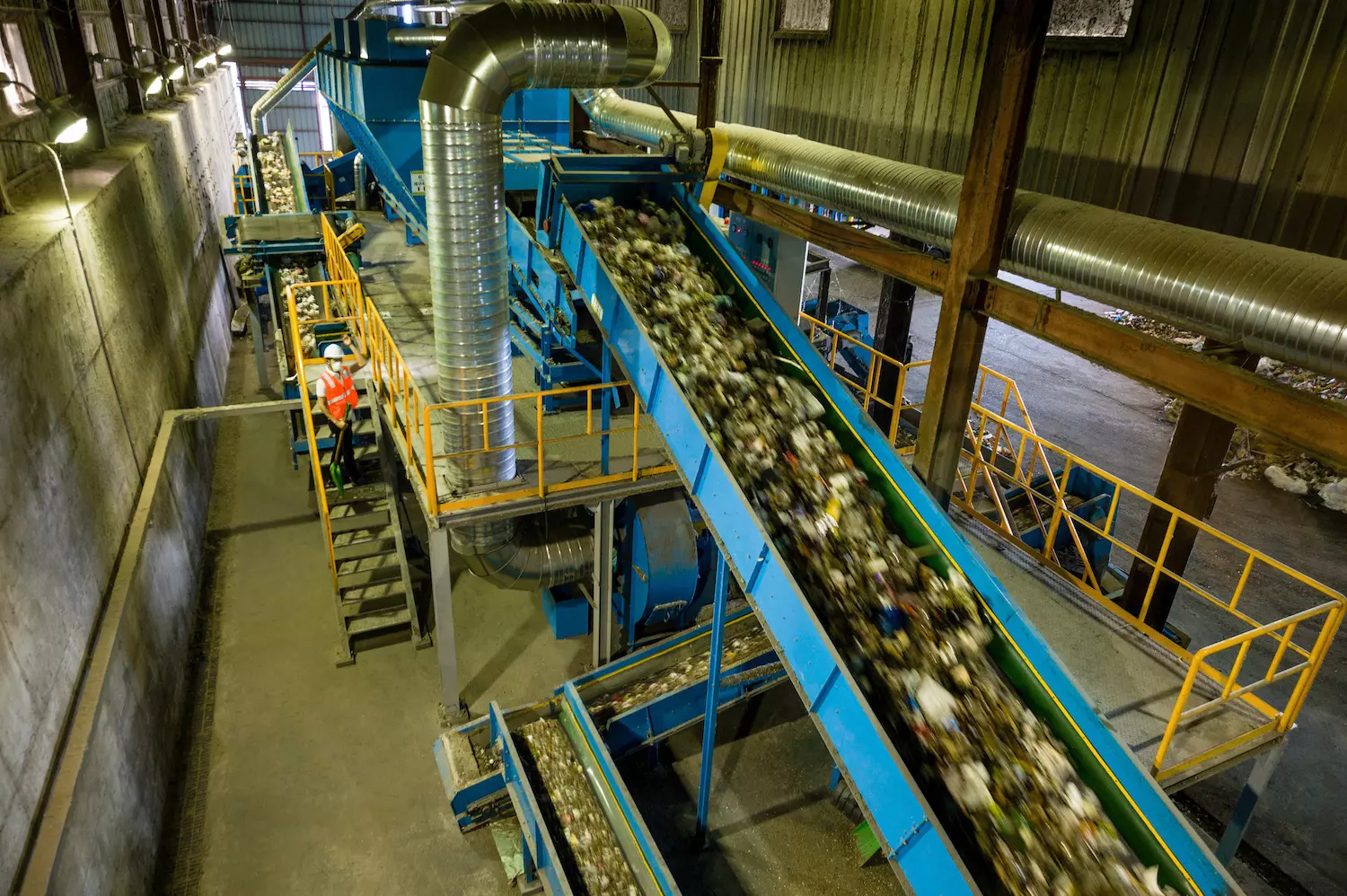
Energy recovery and the removal of recyclables and non-combustible waste are part of this process.
RDF is used as an alternative fuel in industrial applications such as heat generation and in cement kilns, where it partially replaces conventional fossil fuels.
By recovering energy from residual waste, RDF contributes to reducing landfill volumes and supports more efficient resource management.
Managing processing waste
to green energy alternative
Veolia’s refuse derived fuel solutions are engineered to convert residual waste into green, reliable, high-performance fuel.
Through our treatment processes and operational expertise, we ensure consistent quality, regulatory compliance, and measurable environmental benefits.
Key aspects of our RDF solution include:
- Advanced processing & quality control: We apply proven technologies to produce homogenous Refuse Derived Fuel with optimized calorific value.
- Industrial applications & flexibility: RDF is used for cost-effective approach to coal alternatives in energy intensive industries, our systems are tailored to seamlessly integrate into industries.
- Environmental performance: By diverting non-recyclable waste to energy use, RDF reduces the impact on the environment by reducing landfill volumes and by lowering greenhouse gas emissions compared to conventional fossil fuel.
- Circular economy contribution: Our RDF solutions enable industries and municipalities to recover value from waste streams that would be discarded, supporting economic outcomes.

Important
RDF Aspects

Explore
our relevant solutions
# Biogas Solutions # Refuse Derived Fuel # Waste Management and Energy Recovery